
Straightening your teeth is a big decision. And once you have decided to do it, the next question is almost always the same: braces or Invisalign?
Both options work. Both can get you straight teeth. But the right choice depends on your case, your habits and what matters most to you day to day.
This guide breaks it all down. You get a clear comparison of the pros and cons plus a simple framework to help you decide between braces and Invisalign.
Braces vs Invisalign: The Quick Answer
Both treatments straighten teeth by applying steady pressure over time. The difference is how that pressure is delivered, and how much of the work depends on you.
Here is the side-by-side at a glance:
- Visibility. Braces use visible metal brackets and wires. Invisalign is nearly invisible.
- Average treatment time. Braces run 18 to 24 months. Invisalign runs 6 to 18 months.
- Wear time. Braces are fixed to your teeth around the clock. Invisalign is removable and worn 20 to 22 hours a day.
- Food restrictions. Braces rule out hard, sticky and crunchy foods. With Invisalign the trays come out to eat, so nothing is off-limits.
- Office visits. Braces need a visit every 4 to 6 weeks. Invisalign is usually every 8 to 12 weeks.
- Comfort. Brackets can irritate cheeks and lips. Smooth aligners tend to cause less irritation.
- Best for. Braces suit complex cases and anyone who would struggle with daily wear. Invisalign suits mild to moderate cases and disciplined wearers.
Bottom line: Invisalign is a great fit if your case is mild to moderate and you value a discreet look. Traditional braces are usually the stronger choice for complex bite issues or anyone who would struggle to wear removable trays 22 hours a day.
How Braces and Invisalign Actually Work
Understanding the mechanics helps the trade-offs make sense.
Traditional braces use small brackets bonded to each tooth. An archwire connects them, and gentle constant force guides your teeth into their new positions. Your orthodontist adjusts the wire every few weeks to keep progress moving.
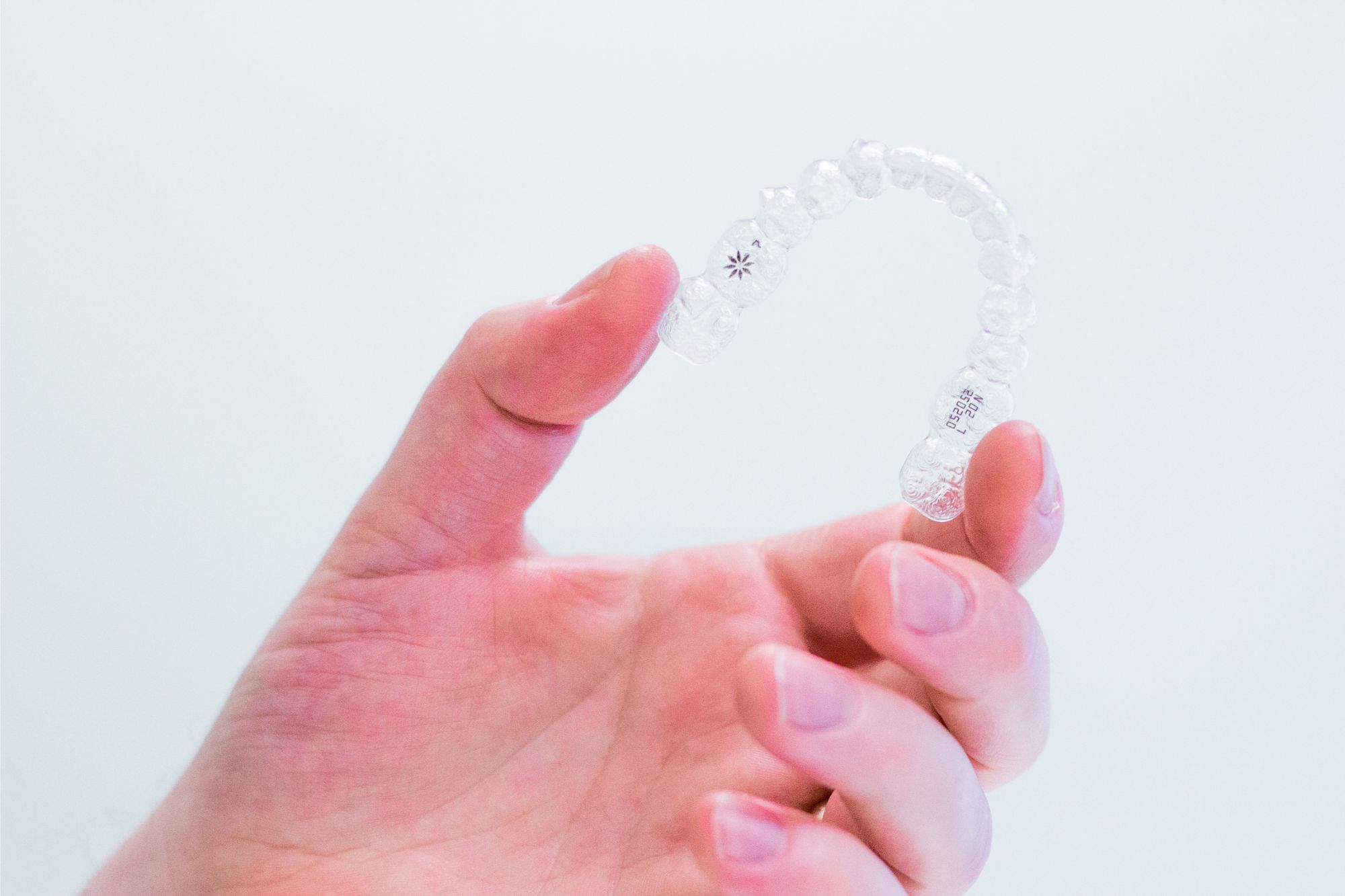
Invisalign works differently. You wear a series of custom-made see-through trays. Each set shifts your teeth a small amount, and you swap in a new set every 1 to 2 weeks. The trays are removable, but they only work when they are in your mouth.
One detail most people do not know: many Invisalign cases need small tooth-colored attachments bonded to certain teeth. These give the trays something to grip so they can produce specific movements. They are not visible from a distance, but they are there.
Refinements are also common. That is an extra set of aligners at the end of treatment to fine-tune the result. Plan on at least one round.
A middle-ground option worth knowing: clear braces use tooth-colored ceramic brackets instead of metal. They work like traditional braces but blend in more with your smile.
Pros and Cons of Invisalign
Pros:
- Nearly invisible in daily life
- Removable for meals, brushing and flossing
- Generally smoother and more comfortable than brackets
- Fewer in-office visits
- No food restrictions
Cons:
- Only work when worn 20 to 22 hours per day
- Easy to misplace if you are not careful
- Attachments may be visible on some teeth
- Not the best fit for severe rotations, big extractions or heavy root movement
- Refinements are often part of the process
Here is the honest truth about Invisalign: the number one reason treatment falls short is compliance. If the trays sit in a case or a napkin instead of your mouth, your teeth do not move on schedule.
Pros and Cons of Traditional Braces
Pros:
- Work continuously, no daily effort required
- Handle the most complex cases well
- Often faster for closing large gaps or heavy tooth movements
- Great option for younger kids or anyone who might lose removable trays
- Predictable results with steady progress
Cons:
- Metal brackets and wires are visible
- Some foods are off the table, like hard candy, popcorn, sticky snacks and whole apples
- Brushing and flossing take more effort and special tools
- Adjustment visits every 4 to 6 weeks
- Brackets can occasionally irritate cheeks and lips
Clear braces offer a nice compromise. You get the reliability of a fixed appliance with a less noticeable look.
Which Cases Each Treatment Handles Best
The appliance has to match the movements your teeth need. Here is how they stack up.
Invisalign excels at:
- Mild to moderate crowding
- Spacing and small gaps
- Minor bite issues
- Open bite, through a controlled vertical force on the back teeth
- Relapse after previous orthodontic treatment
Traditional braces excel at:
- Severe crowding
- Complex bite correction
- Extraction cases
- Heavy tooth rotations
- Deep overbites
Invisalign vs braces for overbite: Traditional braces are often more effective for severe cases because they apply strong continuous force. Invisalign can handle mild to moderate overbites well.
There is also a hybrid path. For certain tricky movements, your orthodontist may recommend a short stretch of sectional braces on just a few teeth alongside your Invisalign treatment. It is a smart way to get the best of both approaches when your case calls for it.
What Affects the Cost of Treatment
The cost of orthodontic treatment depends on your case more than the appliance. A few things move it up or down:
- How complex your case is and how long treatment runs
- The type of appliance, since ceramic and lingual options differ from metal braces and Invisalign
- Whether refinements or extra visits come into play
Insurance often helps. Many dental plans cover part of orthodontic treatment, though coverage varies, so check with your plan. HSA and FSA funds can be applied toward treatment as well. We will walk you through payment options and give you real numbers at your free consultation.
Treatment Timeline and Appointment Frequency
How long will you be in treatment? It depends less on the appliance and more on your case.
Traditional braces typically take 18 to 24 months, with complex cases running closer to 30 months. You come in every 4 to 6 weeks for adjustments.
Invisalign averages 6 to 18 months, with check-in visits usually every 8 to 12 weeks. For a full month-by-month breakdown, see how long Invisalign takes.
A few things affect your timeline:
- Case complexity is the biggest factor
- Skipped aligner wear extends treatment or triggers refinements
- Broken brackets can slow progress with braces
Both options can work faster or slower depending on how your teeth respond and how consistent you are.
Lifestyle Factors That Should Drive Your Decision
If you are on video calls all day or standing in front of a classroom, how your treatment looks and feels matters as much as how it works. Here is what to think about.
Appearance at work or school: Invisalign is the most discreet option. Clear braces offer a nice middle ground if you need brackets but want them less noticeable.
Eating freedom: With Invisalign, you take the trays out and eat whatever you like. Braces mean saying goodbye to a short list of foods that can damage brackets or wires.
Oral hygiene: Aligners come out, so brushing and flossing stay simple. Braces need more time, threaders or interdental brushes.
Comfort: Smooth plastic aligners tend to feel gentler on cheeks and lips. Braces can cause occasional irritation, especially in the first weeks.
Special activities: Musicians who play wind or brass instruments often adjust more easily to aligners. Athletes in contact sports may prefer aligners too, since a mouthguard fits over the teeth once the trays are out. Public speakers on camera usually love how invisible aligners look.
How to Decide: A Simple Framework
Still weighing it? Use this quick check.
Choose Invisalign if you:
- Have a mild to moderate case
- Care a lot about appearance during treatment
- Are disciplined and can commit to 20 to 22 hours of wear daily
- Want fewer office visits
- Do not want to change what you eat
Choose traditional braces if you:
- Have a complex case with severe crowding or bite issues
- Know you would forget to put aligners back in
- Want hands-off treatment
- Have a younger child who might lose removable trays
- Prefer steady, hands-off progress
And bring three questions to your free consultation:
- How complex is my case?
- What specific tooth movements does it need?
- Why do you recommend this appliance for me?
One more thing that matters more than the appliance itself: your provider. A skilled orthodontist who plans your case carefully will get you a better result than any brand name on its own.
Frequently Asked Questions
What is the 30-minute rule with Invisalign?
The 30-minute rule means your aligners should be out of your mouth for no more than about 30 minutes per meal. This keeps you on track to hit the 20 to 22 hours of daily wear needed for your teeth to move as planned.
Why do not some dentists recommend Invisalign?
Some cases are too complex for aligners to handle well. Severe crowding, heavy rotations or big extractions often need the continuous force of braces. Compliance concerns and lack of aligner-specific training can also factor into the recommendation.
Which is more uncomfortable, braces or Invisalign?
Both cause some pressure when teeth start moving, especially in the first few days of a new adjustment or aligner set. Invisalign usually reports less irritation to cheeks and lips because there are no brackets or wires rubbing against soft tissue.
Can I switch from braces to Invisalign mid-treatment?
Sometimes, yes. It requires a fresh evaluation with new records and a new treatment plan. Your orthodontist will look at how far your teeth still need to move and whether aligners can finish the case as effectively as braces.
Comparison guides help, but only an in-person exam can tell you which option is truly right for your teeth. That means a look at your bite, digital scans and X-rays to map out exactly what your case needs.
At The Orthodontic Studio, your free consultation with our orthodontist includes a treatment simulation, so you can see what your results could look like before you commit to anything. We will walk you through both options, answer every question and build a treatment plan for you.
If you are in the Glendale area and ready to explore your options, book your free consult with The Orthodontic Studio today.