
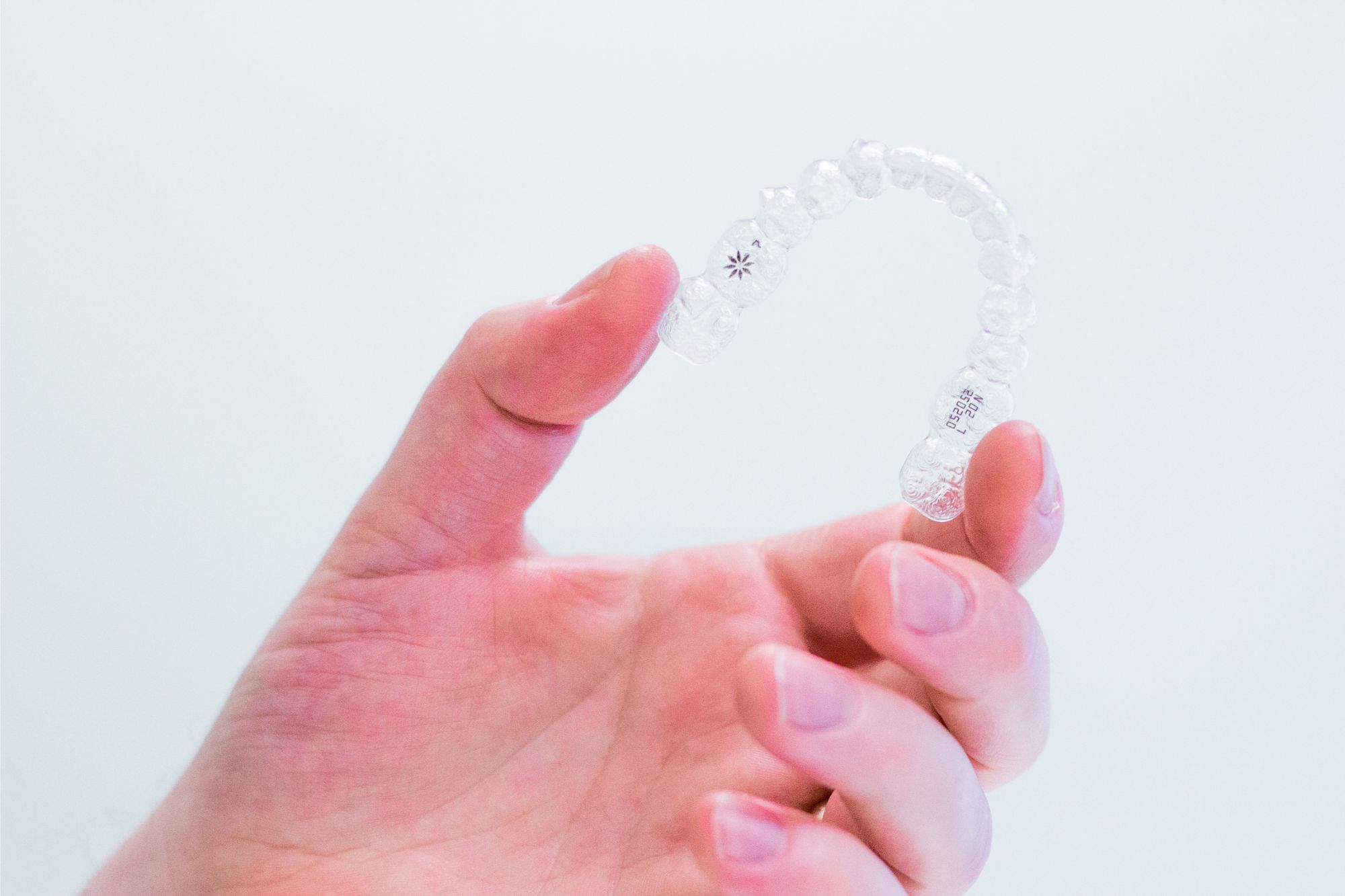
Wondering how long Invisalign will take to straighten your smile? Here is the honest answer, plus what to expect at every stage.
How Long Does Invisalign Take? The Short Answer
Most people finish Invisalign treatment in 6 to 18 months. The average adult case wraps up in about a year.
Here is a quick breakdown by case type:
- Mild cases (minor crowding or spacing): 6 to 9 months
- Moderate cases (noticeable crowding, mild bite issues): 9 to 15 months
- Complex cases (significant crowding plus bite correction): 15 to 24 months
Your actual timeline comes down to two things: how far your teeth need to move and how consistently you wear your aligners. Teeth start shifting within the first few weeks, so results happen sooner than most people expect.
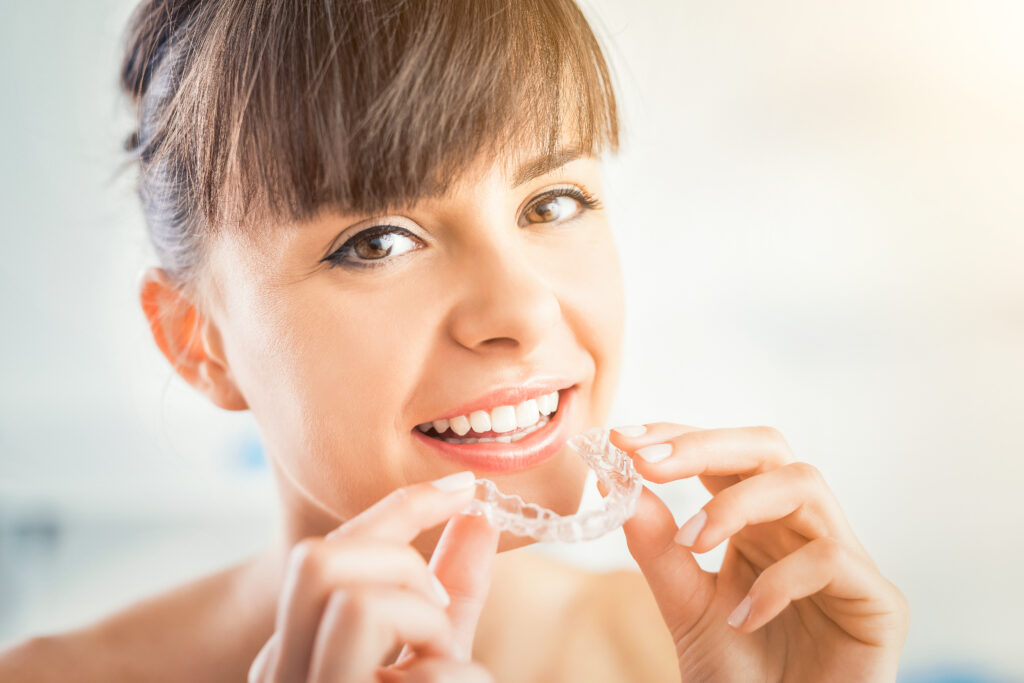
Invisalign Treatment Timeline by Case Complexity
No two smiles are the same. The best way to estimate your treatment length is by matching your situation to one of these three general categories.
- Mild, 6 to 9 months. Minor crowding, small gaps or minor relapse from previous braces.
- Moderate, 9 to 15 months. Noticeable crowding, small bite issues or spacing plus rotation.
- Complex, 15 to 24 months. Severe crowding, significant bite correction or combined issues.
Invisalign also comes in different tiers based on how much correction you need:
- Invisalign Express works for very minor touch-ups, roughly 3 to 6 months.
- Invisalign Lite handles small to moderate corrections, around 6 months.
- Invisalign Comprehensive covers most adult cases, 12 to 18 months on average.
Your orthodontist at The Orthodontic Studio confirms which tier fits your smile after a 3D scan and full evaluation.
Factors That Affect Your Invisalign Treatment Length
Several variables shape how long your treatment runs. Some you can control. Others depend on biology.
- Wear compliance. This is the single biggest factor. Aligners work when they are in your mouth, not in the case.
- Amount of movement needed. More crowding, spacing or rotation means more time.
- Bite issues. Overbite, underbite and crossbite corrections add complexity.
- Age and bone density. Teen teeth often move faster than adult teeth because their jaws are still developing.
- Oral health. Healthy gums and clean teeth help movement stay on schedule.
Good news for adults. You tend to be more consistent with wear than teens, which often keeps your case predictable.
Month-by-Month: What to Expect During Invisalign Treatment
Here is a realistic look at how your time with Invisalign unfolds.
Month 0: Consultation and Planning
Your first visit includes 3D digital scans, photos and a full evaluation. You will see a preview of your future smile and get a personalized treatment plan.
Months 1 to 2: Getting Started
You receive your first aligners. Small tooth-colored attachments may be placed to guide precise movements. Expect some pressure when switching to a new set. Most people report it as tightness, not discomfort, and it fades within a day or two.
Months 3 to 4: Visible Progress
You will start noticing changes. Photos often show alignment shifts before you spot them in the mirror. This is where motivation typically climbs.
Month 6: Significant Progress
Mild cases are often nearing the finish line. Moderate cases show significant improvement. Many people say this is the moment treatment feels truly worth it.
Final Months: Wrapping Up
Refinement aligners fine-tune the final tooth positions. Attachments come off, retainers are fitted, and your new smile is officially yours.
When Will You First See Results?
Sooner than you would think. Teeth begin moving within the first two weeks of consistent wear. Visible changes usually appear by month two or three.
A quick tip: take a photo when you start treatment. Compare it every few weeks. Progress is often clearer in side-by-side images than in the daily mirror check.
Early wins matter. They keep motivation strong and compliance easier through the middle stretch of treatment.
The 22-Hour Rule: Why Compliance Determines Your Timeline
Invisalign aligners need to be worn 20 to 22 hours a day, every day. That is the rule that keeps your teeth moving on schedule.
Here is what compliance looks like in real life:
- Aligners stay in during work, sleep and most social settings.
- You remove them only for meals and to brush and floss.
- The 30-minute rule means aligners should be out for no more than about 30 minutes per meal or drink other than water.
- Skipping days can stall movement and even require going back to a previous tray.
Inconsistent wear is the number one reason cases run longer than planned. If you are not ready to commit to daily wear, be honest about it before you start. Your provider can help you plan around your lifestyle.
Refinement Aligners: A Normal Part of the Timeline
Refinements are additional aligners used at the end of treatment to perfect your final tooth position. They typically add 1 to 3 months to your total time.
Here is what to know:
- Most cases include at least one round of refinements.
- They fine-tune spacing, rotation and bite.
- Refinements are usually part of your original treatment plan, not a separate add-on.
- They are a normal step, not a sign anything went wrong.
Refinements are the final adjustments that dial in the last details of your result.
Retainers: Your Post-Invisalign Timeline
Finishing your aligners is not quite the end. Teeth naturally want to drift back toward their original positions, and retainers are what hold your new smile in place.
Your retainer schedule typically looks like this:
- First few weeks. Full-time wear except for eating and brushing.
- Long-term. Nightly wear, indefinitely.
Skipping retainers is the top reason people end up needing orthodontic treatment a second time. Wear them consistently to protect the result.
Invisalign vs. Traditional Braces: Timeline Comparison
How do the two most common options stack up on treatment time?
- Mild cases. Invisalign 6 to 9 months, traditional braces 6 to 12 months.
- Moderate cases. Invisalign 9 to 15 months, traditional braces 12 to 20 months.
- Complex bite correction. Invisalign 15 to 24 months, traditional braces sometimes slightly faster.
For mild to moderate cases, Invisalign often finishes in a similar or shorter timeframe than braces. Very complex bite corrections may still be handled faster with braces. It is a judgment call best made during your free consultation at The Orthodontic Studio.
Can You Speed Up Invisalign Treatment?
A few strategies may help move things along:
- Wear your aligners. Full compliance at 22 hours a day is the biggest accelerator and the one thing fully in your hands.
- Acceleration devices. Tools like AcceleDent and Propel are sometimes used to encourage faster tooth movement. Ask your provider whether they fit your case.
- Weekly aligner changes. For some suitable cases, switching trays weekly instead of every two weeks can shorten treatment.
- Show up for check-ins. Regular appointments catch tracking issues before they cost you time.
Always talk to your orthodontist before trying acceleration methods. What works for one smile may not fit another.
Frequently Asked Questions About Invisalign Timelines
What is the 30-minute rule for Invisalign?
The 30-minute rule means you should only have your aligners out of your mouth for about 30 minutes at a time, mostly for meals. Longer breaks can slow tooth movement and extend your treatment.
Is wearing Invisalign uncomfortable?
Most people describe it as pressure or tightness, especially in the first day or two after switching to a new tray. That sensation fades quickly as your teeth adjust.
Do people really wear Invisalign 22 hours a day?
Yes, and it is the key to staying on schedule. Aligners only work when they are in your mouth. Consistent wear is what separates cases that finish on time from cases that drag on.
Can Invisalign treatment take less than 6 months?
Yes, for very mild cases. Invisalign Express can wrap up in as little as 3 to 6 months when only small corrections are needed.
How long do I wear retainers after Invisalign?
Indefinitely. You will wear them full-time for the first few weeks, then nightly for the long term. Retainers protect your new smile for life.
Do refinements mean something went wrong?
Not at all. Refinements are a normal, expected part of most cases. They fine-tune the final details for the best possible result.